Tips to stay the course
What does it mean?
It’s important to maintain a consistent investment strategy over time instead of trying to time the market by predicting market highs and lows. Dollar-cost averaging is a strategy that allows you to stay invested in the market. It involves investing a fixed dollar amount of money at regular intervals, instead of investing lump sums.
This guide illustrates the performance of $1,000 invested in different portfolios over 365 days. Those who invested $0 gained nothing, while those who made $500 monthly contributions gained 6.38% more than those who made a one-time $6,000 contribution.
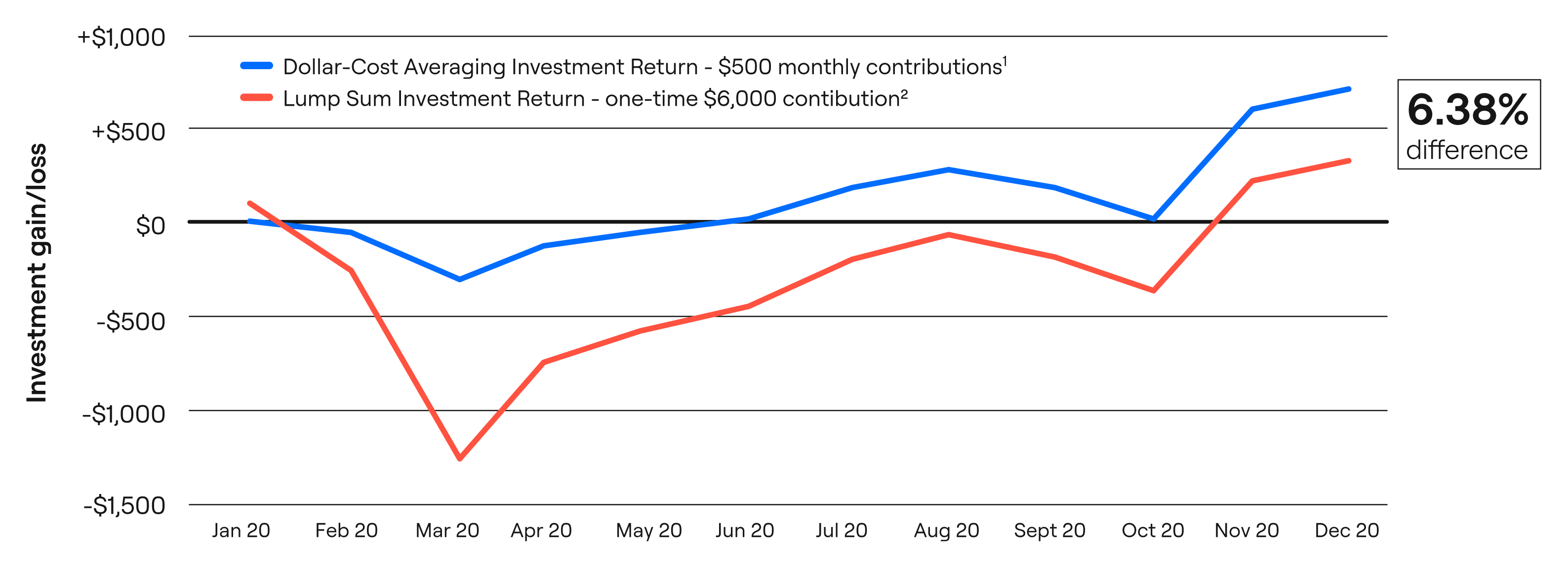
for illustrative purposes only
Source: Scotia Global Asset Management and Morningstar. Based on an illustrative investment in the S&P/TSX Composite Total Return Index. It is not possible to invest directly in an index.
1 Dollar-Cost Averaging illustration assumes 12 contributions of $500/month made between January 1, 2020 and December 31, 2020, totalling $6,000 in contributions.
2 Lump Sum illustration assumes a one-time $6,000 contribution was made on January 1, 2020. The year 2020 was used for illustrative purposes as the benefits of dollar-cost averaging were prominently demonstrated.
Markets rise and fall in the short term, but they tend to grow over the long term. This chart considers the impact of missing the best 10, 20 and 30 days on the value of $10,000 invested in Canadian stocks over the past 10 years.
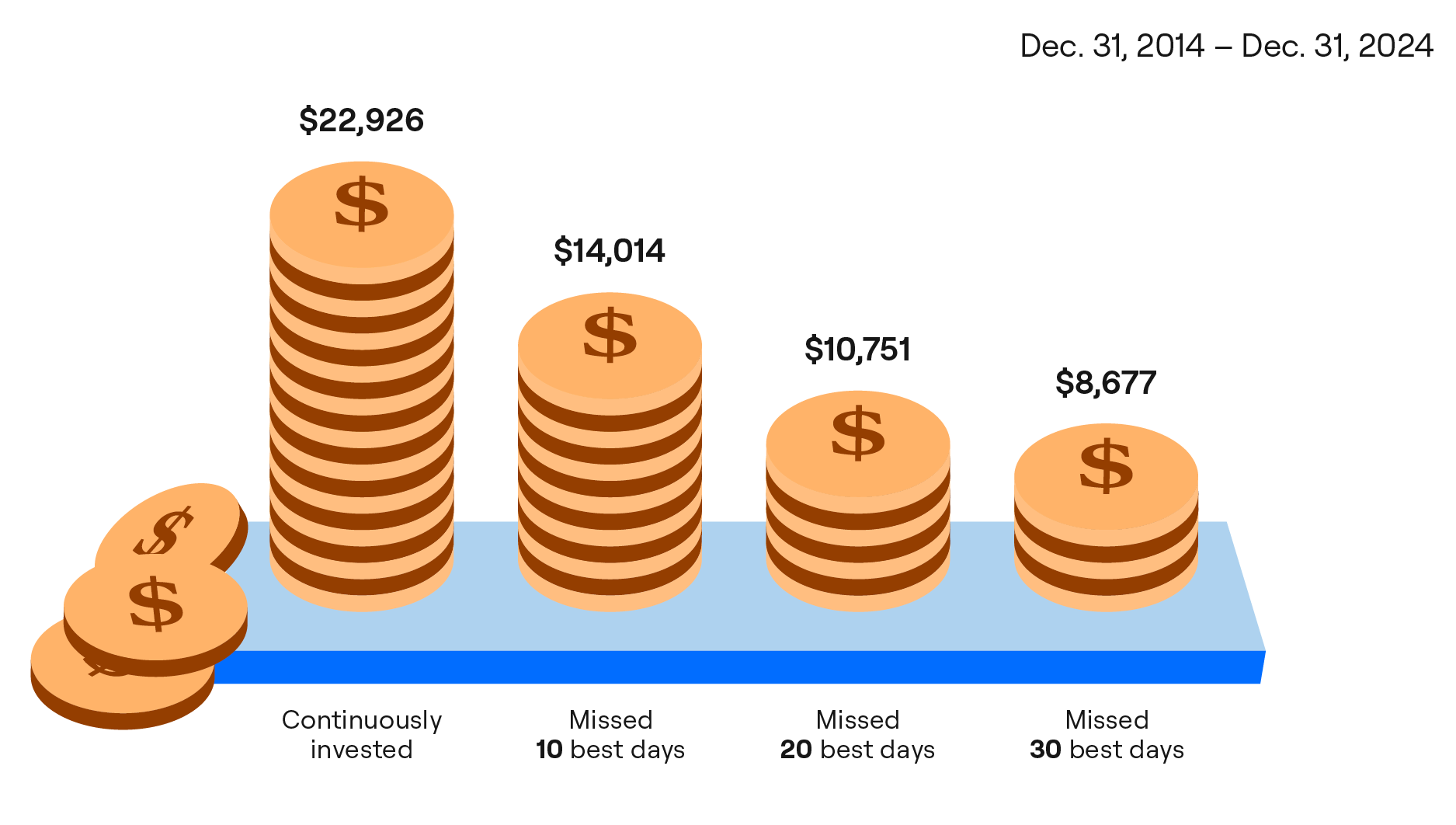
for illustrative purposes only
Source: Morningstar. For illustrative purposes only. S&P/TSX Composite Total Return Index, December 31, 2013 to December 31, 2023. It is not possible to invest directly in an index. Assumes reinvestment of all income and no transaction costs or taxes. Value of investment calculated using compounded daily returns. Missing 10, 20 and 30 best days, excludes the top respective return days.
Takeaway:
Smooths out the average cost per mutual fund unit
Reduces the risk of market timing and missing out on beneficial price movements
Can lead to lower average prices in volatile markets
Dollar Cost Averaging
Find out how over time, and in certain market conditions, dollar-cost averaging may result in a lower average price and a higher gain.
Find out how over time, and in certain market conditions, dollar-cost averaging may result in a lower average price and a higher gain.
What does it mean?
Diversification means spreading your investments across various asset classes (cash, stocks and bonds), and geographic regions. This approach helps reduce risk, as different asset classes and regions tend to perform differently during various market cycles.
This chart illustrates how diversifying your investments across different asset classes provides the opportunity to participate in potential gains of each year’s top asset classes while aiming to lessen the negative impact of those at the bottom.
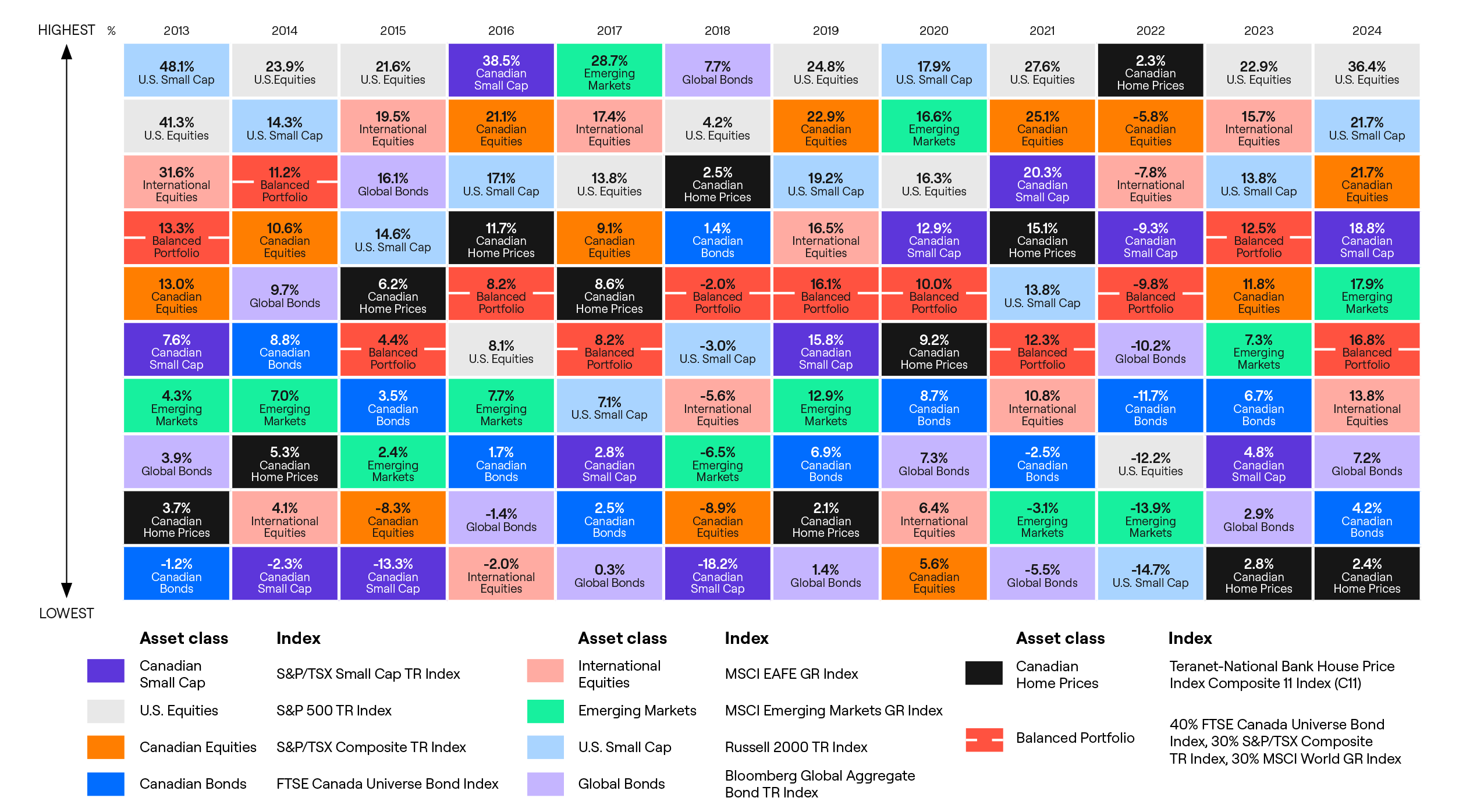
Source: Morningstar. Priced in Canadian currency, as at December 31, 2023. Assumes reinvestment of all income and no transaction costs or taxes. Annual returns compounded monthly. The asset classes are represented by their indicated indices and the balanced portfolio is illustrative in nature and was rebalanced monthly. This information is for illustrative purposes only. It is not possible to invest directly in an index. Canadian Home Prices: Teranet-National Bank House Price Index Composite 11 index (C11). The calculation methodology for the Teranet-National House Price Index Composite has been adjusted effective December 19, 2023. Historical C11 index values have been recalculated to reflect this methodological change.
At less than 5%, Canada represents a tiny portion of the global stock market, and this chart shows that the performance of the Canadian stock market offers investors a compelling reason to shed some of their home country bias in favour of a more global perspective.
Takeaways:
Expands your potential for growth by investing in stocks around the world
Canada accounts for only a small portion of the global market—broadening your portfolio increases opportunities
Diversification ensures a balance: while some investments may lag, others are likely to perform well, reducing overall risk.
What does it mean?
Stay rational. Market volatility can trigger emotional responses, leading to poor investment decisions.
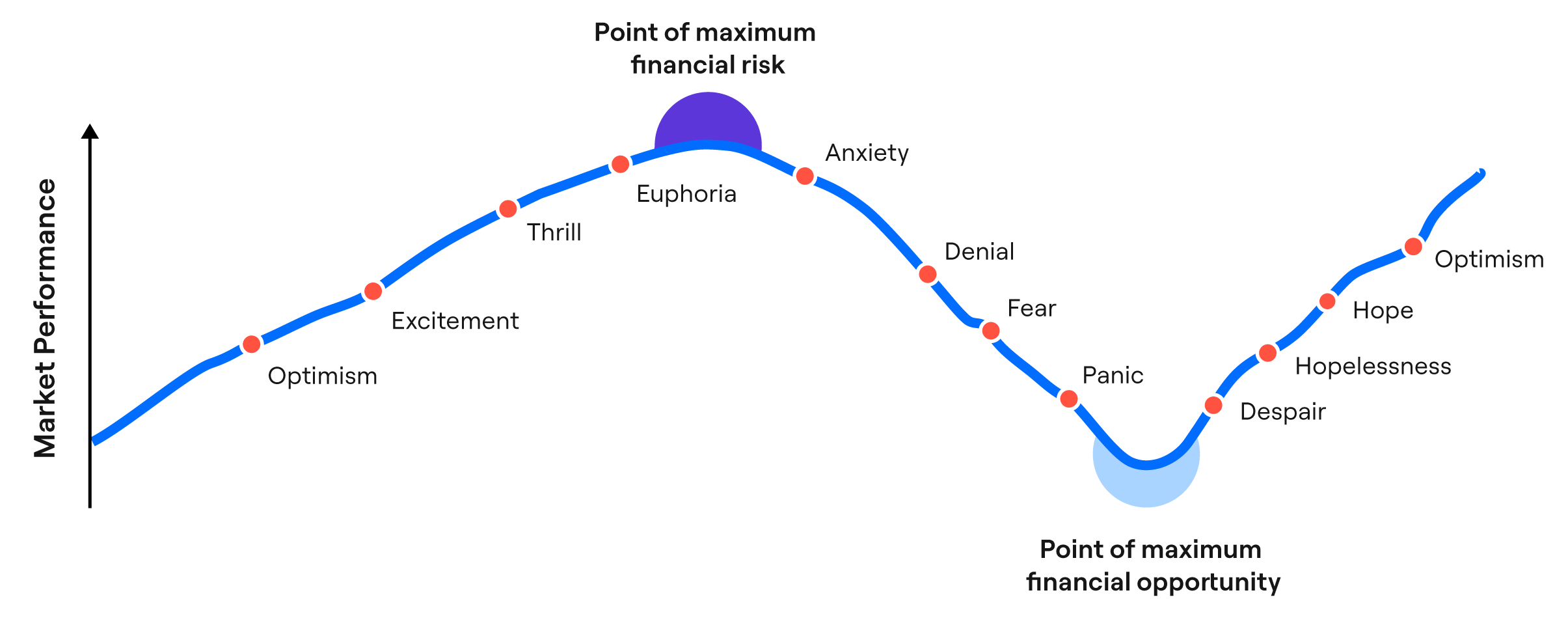
Source: Darst, David M. (Morgan Stanley and Companies, Inc.). The Art of Asset Allocation, 2003.
Takeaways:
History shows that markets recover over time, so disciplined investors often see gains despite short-term downturns
A focus on overcoming fear to benefit from growth is a better way to invest in the long run
What does it mean?
Investing with a professional advisor can help define and achieve your goals leveraging their experience and additional market knowledge.
Takeaways:
Research indicates that working with a financial advisor may double savings rates and significantly enhance asset accumulation over time
The longer you work with an advisor, the greater the potential for your investments to grow over time, helping you stay aligned with your goals
Research shows that Canadians working with an advisor over a four- to six-year period accumulate 1.8 times more assets versus non-advised . Over the long term, the positive impact of financial advice is even greater: after 15 years, households using an advisor have nearly 2.3 times more assets than their non-advised counterparts.
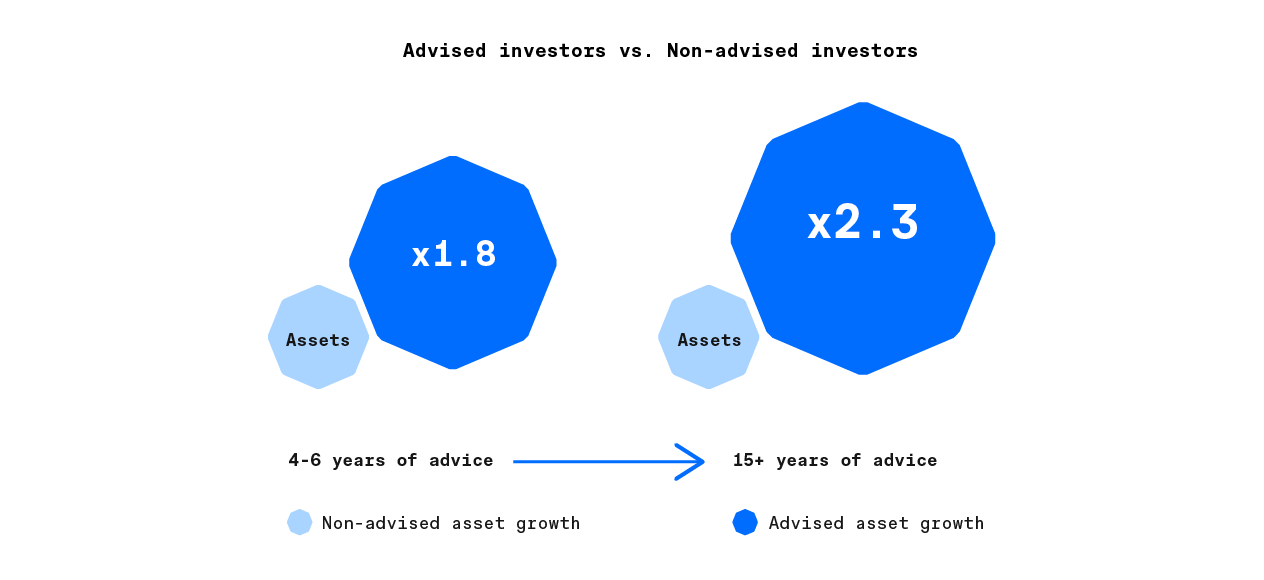
Source: More on the Value of Financial Advisors, Claude Montmarquette, Alexandre Prud'Homme, CIRANO 2020.
What does it mean?
Active managers use their deep knowledge to select specific investments, aiming for better outcomes during volatile markets.
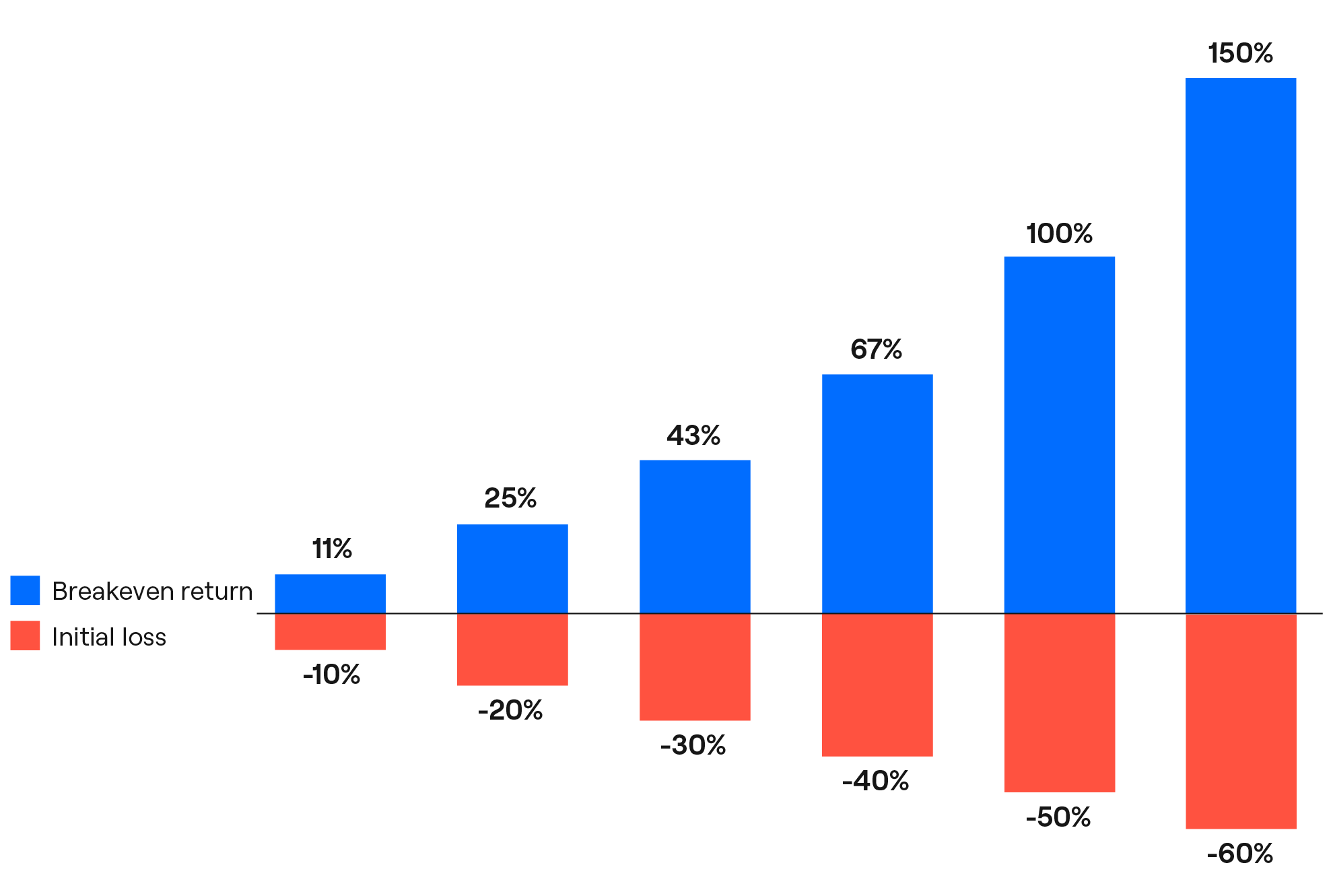
Source: Dynamic Funds
Takeaways:
Can keep you protected during market downturns
Can provide faster recovery when markets rebound
Active managers continuously monitor the market, staying closely attuned to changing market trends

Commissions, trailing commissions, management fees and expenses may be associated with mutual fund investments. Please read the prospectus before investing. Mutual funds are not guaranteed their values change frequently, and past performance may not be repeated.
The information provided is not intended to be investment advice. Investors should consult their own professional advisor for specific investment and/or tax advice tailored to their needs when planning to implement an investment strategy to ensure that individual circumstances are considered properly and action is taken based on the latest available information.
Views expressed regarding a particular investment, economy, industry or market sector should not be considered an indication of trading intent of any of the mutual funds managed by 1832 Asset Management LP. These views are not to be relied upon as investment advice nor should they be considered a recommendation to buy or sell. These views are subject to change at any time based upon markets and other conditions, and we disclaim any responsibility to update such views.
Dynamic® is a registered trademark of The Bank of Nova Scotia, used under license by, and is a division of, 1832 Asset Management L.P.
 Email
Email
 LinkedIn
 Copy Link